Setenil & Ronda 5-Day Andalusia Route: Living Beneath a Million-Ton Canyon Roof
A researched 5-day Southern Spain White Villages route linking Seville, Setenil de las Bodegas, Ronda's El Tajo gorge, and Granada—with 2026 hotel tables and costs.
5 Days
Road Trip + Rail
Mediterranean (36.86° N)
$110–$175/day
March–May & September–November
Episode 02 · Field Studies
Setenil & Ronda Field Photography
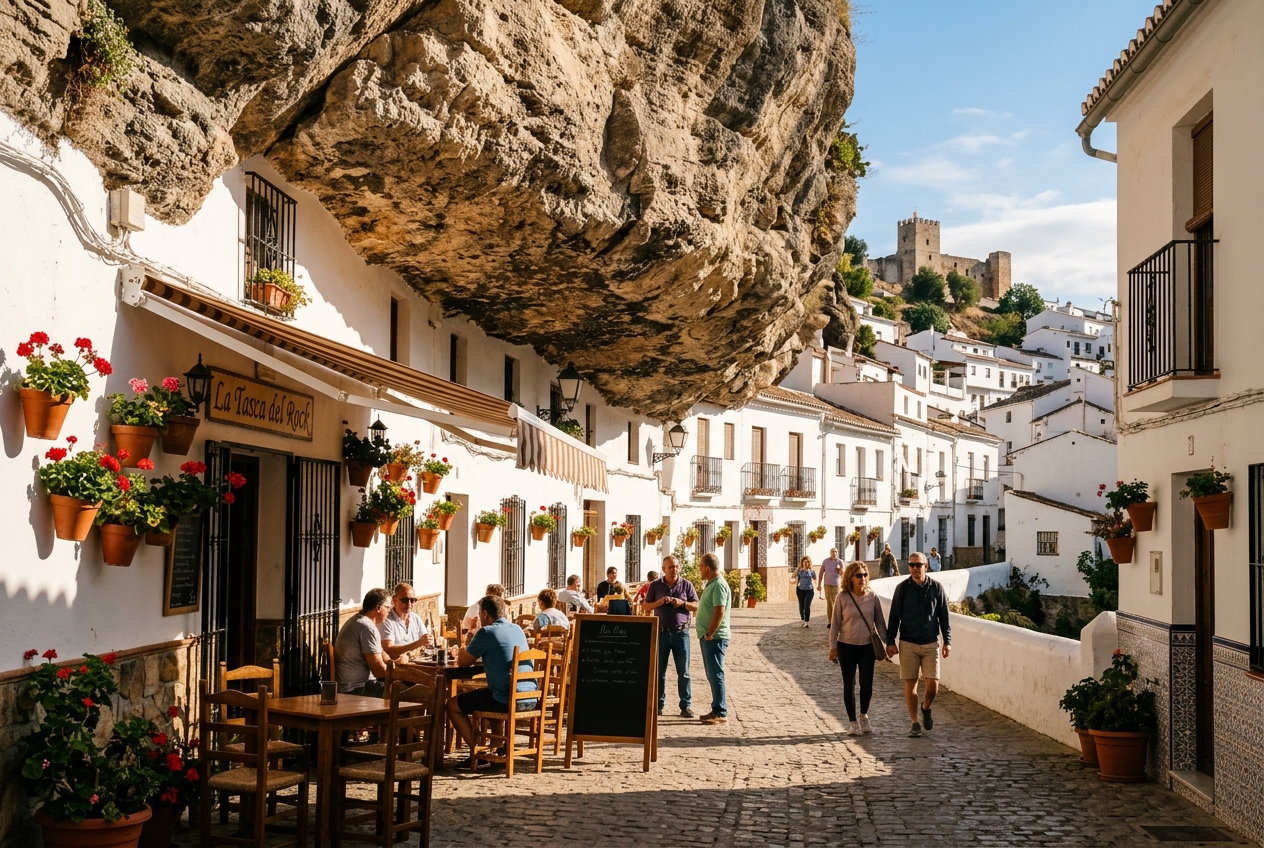
Cuevas del Sol dwellings engineered beneath six million tons of sedimentary canyon rock.
Luis Rogelio HM (CC BY-SA 2.0, Wikimedia Commons)
Puente Nuevo's 98-meter masonry span linking La Ciudad and El Mercadillo across El Tajo.
Tim Adams (CC BY 3.0, Wikimedia Commons)
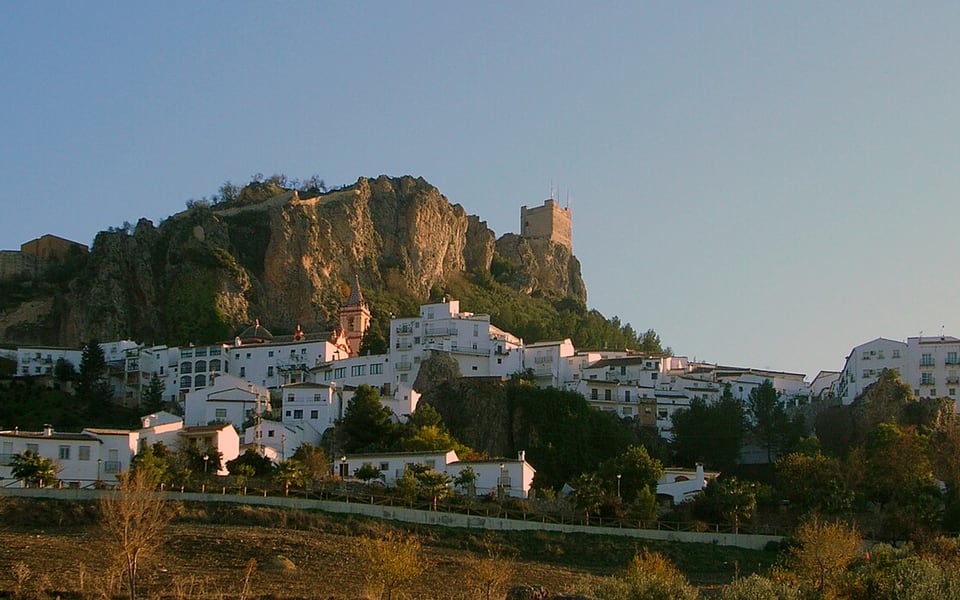
Zahara de la Sierra and the Sierra de Grazalema limestone corridor en route from Seville.
Epithemeus (CC BY-SA 4.0, Wikimedia Commons)
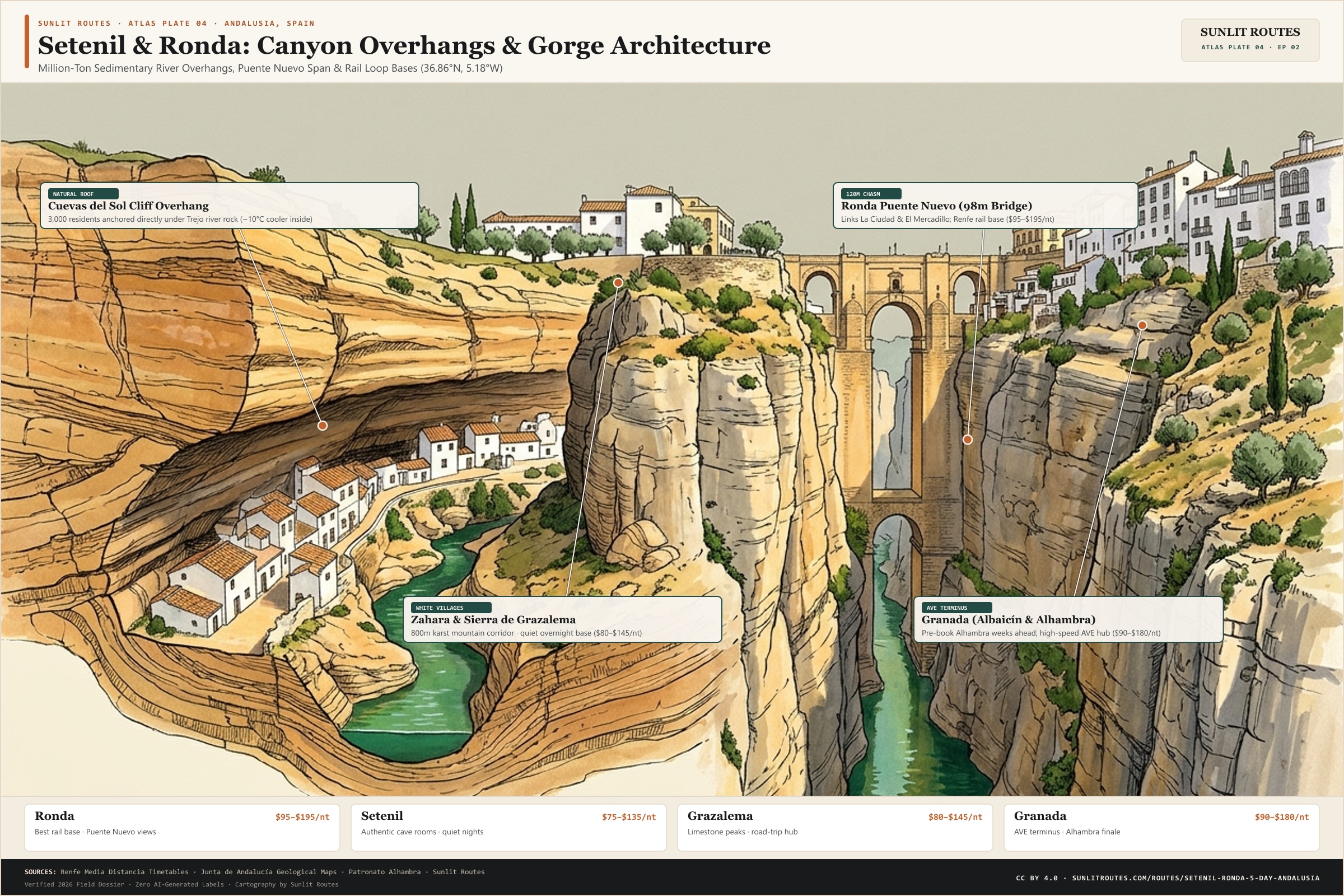
Original Cartography & Engineering Plate
Visual Atlas & Embeddable Route Infographic
Setenil & Ronda: Canyon Overhangs & Gorge Architecture
Million-Ton Sedimentary River Overhangs, Puente Nuevo Span & Rail Loop Bases
Plate 04 maps Setenil's thermal cave architecture alongside Ronda's Puente Nuevo chasm, Sierra de Grazalema, and 2026 Andalusia rail/road base stays.
Primary Sources: Renfe Media Distancia Timetables, Junta de Andalucía Geological Surveys, Patronato de la Alhambra
Stage-by-Stage Progression
Day-by-Day Route Timeline
Seville Departure into the Sierra de Grazalema
Leave the Guadalquivir plains behind, climb into limestone karst peaks, and cross the turquoise Zahara reservoir.
Logistics: 95 km south from Seville via A-375 and CA-9104 (1 hr 45 mins); car-free travelers take the direct bus from Seville Prado de San Sebastián to Ronda.
Setenil de las Bodegas: Life Beneath Six Million Tons of Rock
Arrive before 9:30 AM to walk the silent river-cut cliff overhangs of Cuevas del Sol and Cuevas de la Sombra.
Logistics: Park outside the village core at Los Caños perimeter lot (20 mins north of Ronda); avoid driving into the central river streets.
Ronda's El Tajo Chasm, Puente Nuevo & Arab Baths
Descend to the canyon floor to look up at the 98-meter stone arch of Puente Nuevo and trace Ronda's Moorish waterworks.
Logistics: Reserve the $5.50 timed slot for the upper/mid Desfiladero del Tajo walkway; wear shoes with traction on damp limestone steps.
Caminito del Rey Detour or Serranía Olive Groves to Granada
Travel east across Andalusia's olive-terraced interior—with an optional mid-morning gorge boardwalk hike at El Chorro—to reach Granada before dusk.
Logistics: 180 km via A-367 and A-92 (~2 hrs 15 mins); Renfe Media Distancia train runs directly from Ronda to Granada in 2 hours 25 minutes.
The Alhambra Hydraulic Complex & Albaicín Departure
Spend the morning inside the Nasrid Palaces and Generalife gardens before boarding afternoon high-speed rail.
Logistics: Carry your physical passport to the Alhambra gate (mandatory ID match); Granada station connects via AVE to Madrid (3.5 hrs) or Avant to Seville (2.5 hrs).
Accommodation Strategy
Where to Stay: Base-Town Comparison & Map
| Base Town | Vibe | Ideal For | Nightly USD | Trade-Offs |
|---|---|---|---|---|
| Ronda (La Ciudad & El Mercadillo) | Dramatic cliff-rim town split by the 120-meter El Tajo gorge | First-time visitors, car-free rail travelers, and sunset gorge walkers | $95–$195/night | + Direct Renfe train connections to Córdoba, Málaga, and Granada; walkable to Puente Nuevo, Arab Baths, and dramatic canyon trails; best evening restaurant scene. − Day-trip coach buses crowd the main bridge between 11:00 AM and 3:30 PM; historic-center street parking is tight. |
| Setenil de las Bodegas | Compact troglodyte river gorge town tucked beneath limestone overhangs | Slow travelers wanting quiet early-morning cave streets after tour groups leave | $75–$135/night | + Authentic cave-house apartments carved under Cuevas del Sol; peaceful before 10:00 AM and after 6:00 PM; 20 minutes from Ronda. − Very limited evening nightlife; narrow medieval alleys require leaving rental cars in perimeter lots. |
| Zahara de la Sierra / Grazalema | High mountain white villages framed by turquoise reservoirs and limestone peaks | Road-trippers seeking alpine-style Andalusian hiking and quiet nights | $80–$145/night | + Unobstructed vistas across Sierra de Grazalema Natural Park; dramatic winding mountain passes; zero mass-bus congestion. − Requires a rental car; winter and early spring mornings can feel surprisingly brisk at 800+ meters elevation. |
| Granada (Albaicín & Realejo) | Historic Moorish hillside quarter facing the snow-dusted Sierra Nevada | Closing the 5-day loop with Alhambra access and high-speed rail departures | $90–$180/night | + Direct AVE high-speed rail back to Madrid or Seville; free tapas culture in Realejo; immediate proximity to the Alhambra complex. − Albaicín's steep cobbled lanes are exhausting with heavy rolling luggage; Alhambra tickets sell out weeks ahead. |
Transparent 2026 Economics
Real Trip Cost Calculator & Breakdown
2026 Trip Budget Estimator
Setenil & Ronda · On-the-ground spend (excl. flights)
$770 per person ($154/day incl. shared-room savings).
Covers lodging, local transit, daily meals, and flagship entry fees at 2026 field-verified rates.
| Expense Category | Lean / Budget | Mid-Range | Field Notes |
|---|---|---|---|
| Parador / Boutique Cave & Town Stays (per person, double occ.) | $50 | $90 | Setenil cave apartments run $80–$120/night; Ronda gorge-view boutiques and historic Granada stays average $130–$195/night. |
| Tapas, Olive Oil Tastings & Dinners | $26 | $42 | Coffee and tostada breakfast costs $5; in Granada, a $3.50 drink still includes a generous complimentary tapa. |
| Rental Car, Fuel & Perimeter Parking (or Renfe Rail) | $20 | $25 | Compact car rentals average $24–$35/day off-peak; Renfe Media Distancia trains between Seville, Ronda, and Granada cost $16–$28 per leg. |
| Alhambra Entry, Ronda Gorge Path & Guided Walks | $14 | $18 | Official Alhambra General ticket is ~$21 ($65+ with skip-the-line guided tour); Ronda Desfiladero del Tajo lower path is ~$5.50. |
Vetted Local Operations
Top Bookable Excursions & Passes
 GetYourGuide3 hours
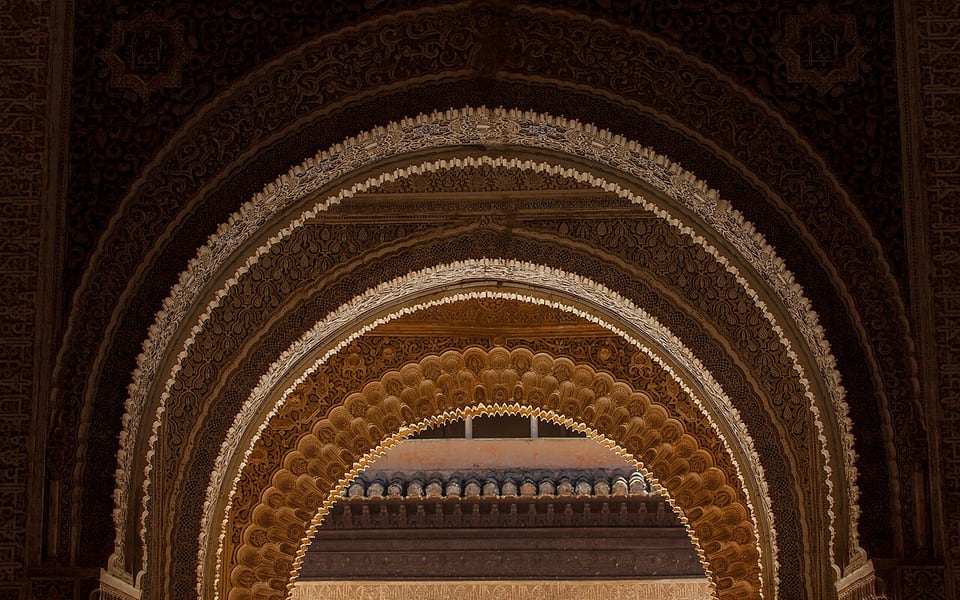
Alhambra Nasrid Palaces & Generalife Skip-the-Line Guided Tour
Official Alhambra timed slots sell out 4–8 weeks ahead; a licensed guide both secures guaranteed Nasrid Palace entry and decodes the hydraulic and geometric stucco engineering.
Photo: Grand Parc Bordeaux (CC BY 2.0, Wikimedia Commons)
 GetYourGuide10 hours
White Villages & Ronda Private or Small-Group Route from Seville
Links Zahara de la Sierra, Grazalema, Setenil, and Ronda in one day without navigating hairpin mountain roads or steep hillside parking.
Photo: Grez (CC BY-SA 3.0, Wikimedia Commons)
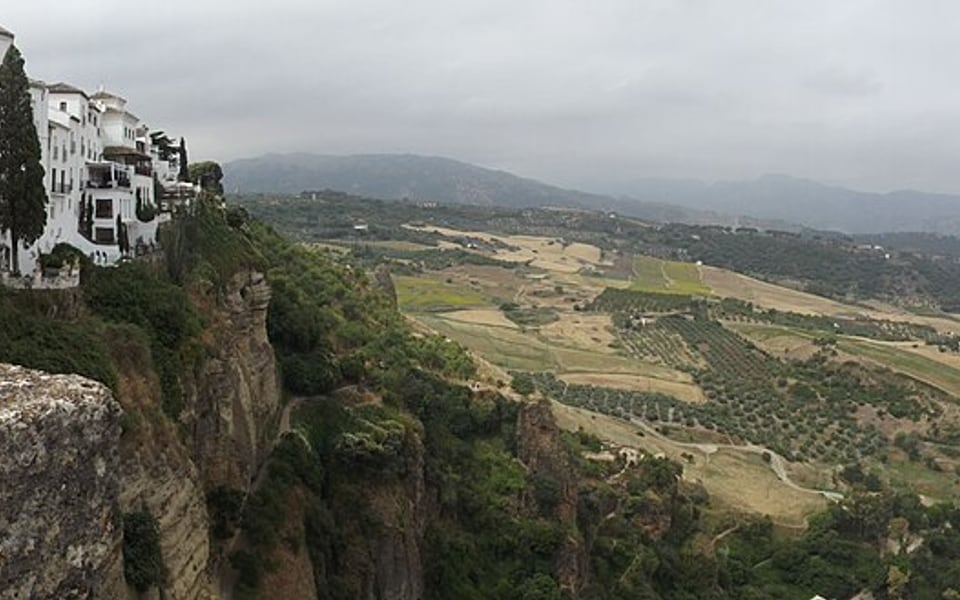 GetYourGuide2.5 hours
Ronda El Tajo Gorge & Historic La Ciudad Architectural Walk
Unlocks context on the 13th-century Moorish Arab Baths, Mondragón Palace hydraulics, and the 34-year construction collapse and rebuild of Puente Nuevo.
Photo: Elliott Brown (CC BY-SA 2.0, Wikimedia Commons)
Architecture Carved by Water, Heat, and Gravity
Sixty kilometers inland from the Costa del Sol, the Andalusian plains buckle upward into the Serranía de Ronda—a jagged limestone plateau of pale karst ridges, deep river gorges, and stark whitewashed towns. Most travelers race past these Pueblos Blancos on a hurried bus tour between Seville and Granada, catching twenty minutes for photos at Ronda's main bridge before climbing back aboard.
Slowing this corridor into a five-day route reveals a much sharper story. Both Setenil de las Bodegas and Ronda exist the way they do because human builders solved extreme Andalusian summer heat and impassable canyon topography by turning the geology itself into load-bearing architecture.
The Documentary Spine: Two Canyon Survival Mechanics
1. Setenil's Passive-Thermal Cave Houses
Walk down Calle Cuevas del Sol in Setenil de las Bodegas and you are standing inside an ancient river meander. Over hundreds of thousands of years, the Trejo River sliced laterally into horizontal beds of softer sandstone beneath a massive, dense caprock of Miocene calcarenite conglomerate. Where the river carved an undercut recess up to 40 meters high, prehistoric and medieval inhabitants realized half a house already existed.
Instead of quarrying stone to build roofs and back walls, residents simply raised a single whitewashed facade across the mouth of the overhang. That geological shortcut delivered natural climate engineering: roughly six million tons of porous rock overhead acts as an enormous thermal battery. In July and August, when afternoon air temperatures across inland Andalusia climb past 38°C, interior rooms inside Setenil's abrigo bajo rocas dwellings stay naturally around 20–22°C with zero mechanical air conditioning.
2. Ronda's 34-Year Bridge Across El Tajo
Fifteen kilometers south, the Guadalevín River carved an even steeper barrier: El Tajo, a sheer 120-meter-deep limestone slot splitting Ronda's ancient Moorish citadel (La Ciudad) from the newer commercial plateau (El Mercadillo). For centuries, crossing between the two halves required descending steep canyon tracks on foot or pack mule.
An earlier single-arch bridge built in 1735 collapsed just six years later in 1741, killing fifty people. Determined to close the chasm permanently, master architect José Martín de Aldehuela launched a bold engineering effort in 1759—constructing Puente Nuevo from the floor of the gorge upward using stone quarried right inside the ravine. Completed in 1793 after 34 years of construction, the bridge rises 98 meters tall, incorporating a central arched chamber directly above the water cascade that served variously as a civic lockup and guardhouse.
3. The British-Built Gorge Railway Through the Serranía
A century after Puente Nuevo opened, Ronda remained largely isolated from coastal ports until British railway engineers led by Alexander Henderson and Sir William Morrison blasted the Algeciras–Bobadilla line through the limestone canyons between 1890 and 1892. Built originally so Royal Navy officers stationed in Gibraltar could escape summer heat up into Ronda's cool mountain air, that single-track line still carries Renfe Media Distancia trains across stone viaducts and through the El Chorro chasm today—turning what looks like remote backcountry into an effortless car-free rail corridor.
Choosing Your Base Town: Ronda vs. Setenil vs. Zahara
Where you sleep determines whether you experience Andalusia's white villages alongside midday coach crowds or in quiet golden-hour solitude:
- Base in Ronda (Best All-Around & Car-Free Hub): Stay inside La Ciudad (south of Puente Nuevo) for silent stone alleys after dusk, or just north in El Mercadillo if you want flat ground near the train station and tapas bars. Ronda's 120-meter cliff promenade lights up cleanly at night, and every major historical monument sits within a 15-minute walk.
- Base in Setenil de las Bodegas (Best for 1 Quiet Cave-House Night): Booking a carved cave apartment along Calle Jabonería or Cuevas del Sol lets you step outside at 7:30 AM before a single tour bus arrives. Choose this for Night 1 or Night 2 if you are traveling by car, then transfer to Ronda or Granada.
- Base in Zahara de la Sierra or Grazalema (Best for Mountain Drivers): Ideal if your priority is early-morning limestone ridge hikes like the Garganta Verde or El Pinsapar Spanish fir forest (which require free advance park permits in summer).
Ronda and Setenil Itinerary: Exact 1-to-2 Day Gorge Loop
Whether you are weaving Setenil and Ronda into a full five-day Seville-to-Granada loop or running a dedicated Ronda and Setenil itinerary over 36–48 hours, sequence the two canyon towns in reverse of day-trip bus traffic:
- Evening & Night 1 in Ronda (or Setenil): Arrive after 5:30 PM once coach excursions depart. Walk Puente Nuevo and the Alameda del Tajo cliff parapet at dusk when the limestone walls turn amber.
- Morning 1 (7:45 AM – 10:30 AM) in Setenil de las Bodegas: Drive 20 minutes north from Ronda (or take a $25–$30 morning taxi) and park at the perimeter Los Caños lot. Walk Cuevas del Sol, Cuevas de la Sombra, and Mirador del Lizón in complete quiet before tour buses enter the valley around 11:00 AM.
- Afternoon 1 & Morning 2 in Ronda's Lower Gorge: Return to Ronda for the timed Desfiladero del Tajo lower canyon footpath, La Casa del Rey Moro water mine, and the Baños Árabes before continuing east toward Granada or Málaga.
5-Day Route: Seville → Setenil → Ronda → Granada
Day 1: Seville into the Sierra de Grazalema
Collect a compact rental car at Seville Santa Justa (or board the morning regional bus if traveling car-free) and head southeast toward the Sierra de Grazalema Natural Park—paradoxically the wettest corner of southern Spain because its limestone barrier forces Atlantic moisture skyward.
Stop at Zahara de la Sierra, where whitewashed walls cling tightly below a 13th-century Nasrid watchtower overlooking a bright turquoise reservoir. From Zahara, climb the Puerto de las Palomas pass (1,157 meters) along the CA-9104—one of Andalusia's cleanest mountain drives—dropping into the stone village of Grazalema before arriving in Ronda or Setenil by late afternoon.
Day 2: Dawn Under Setenil's Overhangs
Timing is everything in Setenil de las Bodegas. Tour buses from Málaga and Seville fill the river corridor between 11:00 AM and 4:00 PM; outside those hours, the town belongs to its 2,700 residents.
Arrive before 9:30 AM and park at the perimeter Los Caños lot on the northern rim—never drive a rental car down into the tight pedestrian overhang alleys. Walk directly to Cuevas del Sol for coffee under the sunlit southern ledge, then cross the footbridge into Cuevas de la Sombra, where the canyon roof blocks the sky completely. Climb up the stepped lanes past the ruined Moorish tower to Mirador del Lizón for the classic high-angle view showing white facades disappearing directly under raw brown rock strata.
Day 3: Ronda's Gorge Floor & Hydraulic Foundations
Spend a full, unhurried day in Ronda. Start at 8:30 AM on the Desfiladero del Tajo lower gorge trail (entry ~$5.50, booked online for timed access), which wraps safely along the inner cliff shelf directly below Puente Nuevo's central piers. Looking up from below reveals how Aldehuela anchored the stone masonry straight into vertical gorge fractures.
Mid-morning, walk back across La Ciudad to visit La Casa del Rey Moro, where a 14th-century Moorish staircase of roughly 200 rock-hewn steps descends inside the cliff face to the river—an emergency water-supply shaft designed to withstand medieval sieges. Finish late afternoon down at the Baños Árabes, preserved 13th-century thermal baths fed by an aqueduct and waterwheel system still visible beside the river meadow.
Day 4: Across the Olive Heartland to Granada
Point east toward Granada along the A-367 and A-92 corridor (2 hours 15 minutes driving; or 2 hours 25 minutes aboard the scenic Renfe Media Distancia train). If you hold advance timed tickets for El Caminito del Rey at Ardales, this route passes within 20 minutes of the gorge entrance—an effortless morning detour along suspended canyon catwalks bolted 100 meters above the Guadalhorce River.
Arrive in Granada by late afternoon, drop bags in the Realejo or lower Albaicín neighborhood, and walk uphill before sunset to Mirador de San Nicolás. As light turns warm amber, the red-clay ramparts of the Alhambra rise directly in front of the snow-streaked Sierra Nevada peaks.
Day 5: The Alhambra's Gravity Hydraulics & Departure
Reserve the 8:30 AM or 9:00 AM Nasrid Palaces slot weeks ahead—physical passport inspection is strictly enforced at the gate. While visitors rightly focus on the Nasrid stucco geometry and Muqarnas stalactite domes, look closely at the ground channels: the entire hilltop citadel works without electric pumps, driven solely by the Acequia Real, a six-kilometer gravity aqueduct tapping the Darro River upstream to feed fountains, baths, and Generalife orchard terraces simultaneously.
Close the afternoon wandering the silk-market alleys of Alcaicería and sipping mint tea in Calderería Nueva before taking an afternoon AVE or Avant train back to Madrid or Seville.
Rental Car vs. Car-Free Rail Logistics
| Segment | Rental Car (Flexibility Pick) | Car-Free Rail & Bus (Zero-Parking Pick) |
|---|---|---|
| Seville → Grazalema → Ronda | 1 hr 45 min via A-375; full access to Zahara & mountain passes | Direct Damas/Los Amarillos bus from Seville Prado de San Sebastián (2 hrs 15 mins) |
| Ronda ↔ Setenil | 20 mins via A-367 & CA-9113; park at perimeter lots | 20-minute local taxi ($25–$30 each way) or limited regional bus |
| Ronda → Granada | 2 hrs 15 min via A-367/A-92 (easy Caminito del Rey stop) | Direct Renfe Media Distancia train (2 hrs 25 mins, ~$20) |
| Daily Parking Reality | Expect $14–$20/night for underground garages in Ronda & Granada | Zero parking stress inside steep medieval quarters |
Andalusia Canyon Extension: El Caminito del Rey
If you have an extra half-day between Ronda and Granada (or are returning toward Málaga), El Caminito del Rey at Ardales sits roughly 45 minutes east of Ronda along the A-367. Originally built in 1901–1905 as a concrete maintenance catwalk for hydroelectric workers inside the vertical Desfiladero de los Gaitanes limestone gorge, the modern rebuilt boardwalk hangs 100 meters above the Guadalhorce River.
- Booking Rule: Official North Access (Ardales) timed tickets sell out weeks ahead during spring and autumn; book general admission ($11) or a guided shuttle-return ticket ($25–$35) directly when reserving your Alhambra slot.
- Car-Free Rail Access: Renfe Media Distancia trains run between Ronda, Málaga, and El Chorro–Caminito del Rey station, making it an easy rail-linked addition to this corridor.
Connectivity & Travel eSIM Note
Driving the Serranía de Ronda or navigating ZBE camera zones in Seville and Granada requires reliable turn-by-turn GPS, digital Alhambra QR tickets, and Renfe mobile passes. Non-EU travelers arriving from the US, UK, Canada, or Australia can install a prepaid Spain or Europe Travel eSIM before departure so offline-mapped canyon passes and timed-entry confirmations load cleanly without airport roaming surcharges.
Seasonality & Packing Notes
- Peak Sweet Spots (Late March–May & Late September–Early November): Daytime temperatures settle between 20°C and 26°C, hills remain green after winter rain, and canyon walks remain comfortable all afternoon.
- Summer Trap (July–August): Inland temperatures in Seville, Ronda, and Granada regularly cross 38–42°C between 1:00 PM and 6:00 PM. If traveling in midsummer, schedule outdoor gorge walks before 10:30 AM and retreat indoors during siesta hours.
- Winter Reality (December–February): Crisp 12–16°C sunny afternoons in Ronda and Granada, with freezing nights—bring a packable down jacket for sunset viewpoints facing the snowy Sierra Nevada.
Lock in your Alhambra timed entry and Desfiladero del Tajo gorge slots first; once those two timestamps are anchored, every whitewashed village and canyon road between Seville and Granada falls cleanly into place.
Practical Andalusia Logistics: Parking, Permits & Tapas Economics
Three micro-details save noticeable time and money along this corridor:
- ZBE Low-Emission Zones & Medieval Parking: Both Seville and Granada enforce strict central Zona de Bajas Emisiones camera restrictions on non-registered vehicles, and historic streets in Setenil and Ronda's La Ciudad are narrower than modern SUVs. Always book a hotel with confirmed garage access or navigate straight to perimeter public garages (Parking El Castillo or Parking Martínez Astein in Ronda; Los Caños in Setenil; Parking Triunfo or Garaje Rex in Granada).
- Alhambra Ticket Timing Rules: Your printed or mobile QR ticket carries an exact 30-minute window for entering the Nasrid Palaces (Palacios Nazaríes). Missing that half-hour window forfeits Nasrid entry even if you are already inside the outer fortress grounds, so arrive at the palace courtyard queue 25 minutes early with your physical passport in hand.
- Granada's Complimentary Tapas Tradition: Unlike Seville—where tapas are ordered and priced individually—traditional bars across Granada's Realejo, Calle Navas, and Campo del Príncipe still serve a substantial free plate (grilled pork skewer, fried eggplant with cane honey, or seafood rice) with every $3.50 glass of tinto de verano, beer, or alcohol-free mosto. Two rounds easily replace a $25 sit-down dinner.
Practical Field Questions
Frequently Asked Questions
Spending at least one night in a cave apartment—or arriving from nearby Ronda before 9:30 AM—completely transforms the experience. Between 11:00 AM and 4:00 PM, day-trip buses fill Cuevas del Sol; at dawn and dusk, you hear only the Trejo river flowing under the canyon roof.