The Dolomites 5-Day Scenic Route: Fossil Coral Reefs, Alpine Passes & Base Towns
A researched 5-day Dolomites itinerary covering Val di Funes, Seceda, Alpe di Siusi, and Lago di Braies—comparing Ortisei vs. Cortina d'Ampezzo with 2026 costs.
5 Days
Scenic Drive + Cable Car
Alps (46.58° N)
$175–$320/day
June–early July & September–mid October
Episode 03 · Field Studies
The Dolomites Field Photography
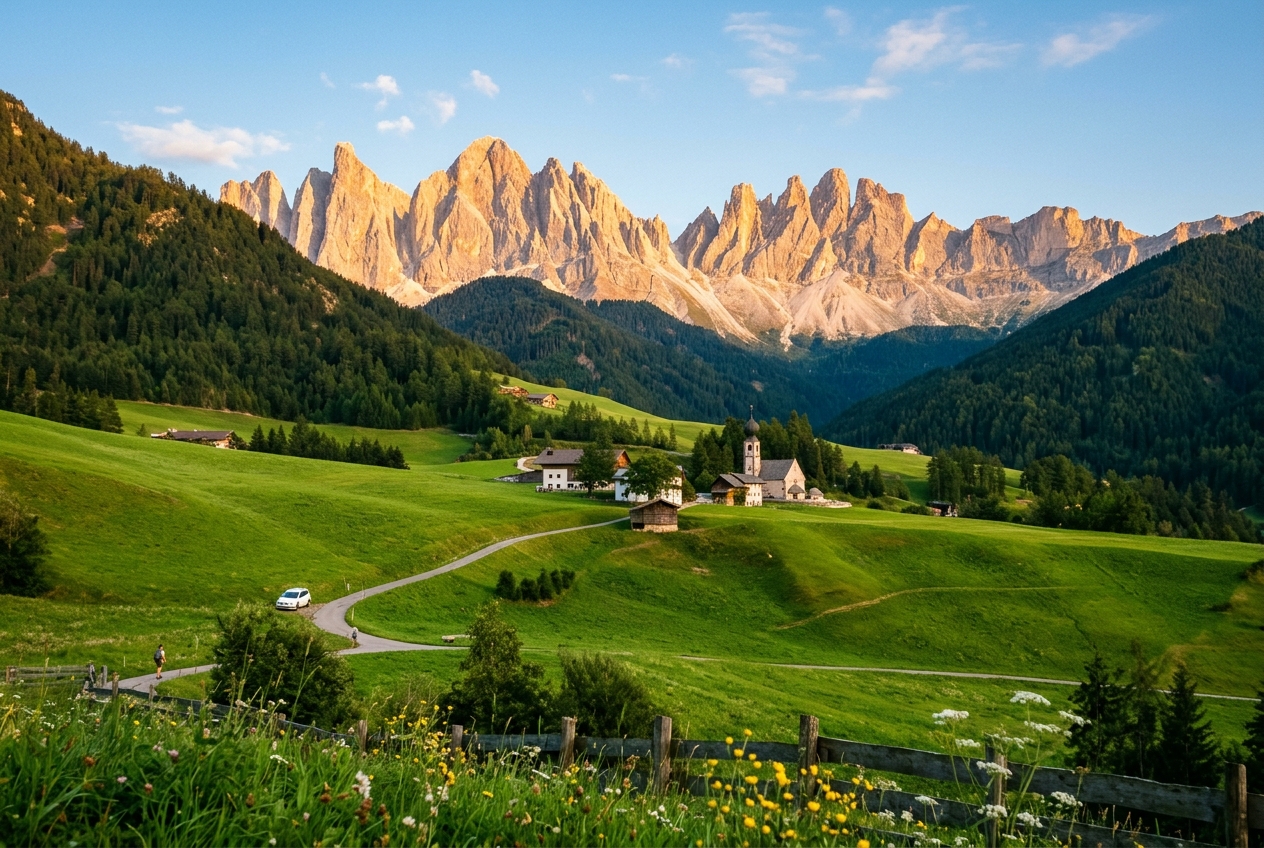
The Odle/Geisler massif rising above Santa Maddalena's pastoral valley floor.
Einaz80 (CC BY-SA 4.0, Wikimedia Commons)
Seceda's 2,519-meter reef-block ridge accessed directly by gondola from Ortisei.
Wolfgang Moroder (CC BY-SA 3.0, Wikimedia Commons)
Early-morning reflections across Lago di Braies beneath the Croda del Becco wall.
Jörg Blobelt (CC BY-SA 4.0, Wikimedia Commons)
Original Cartography & Engineering Plate
Visual Atlas & Embeddable Route Infographic
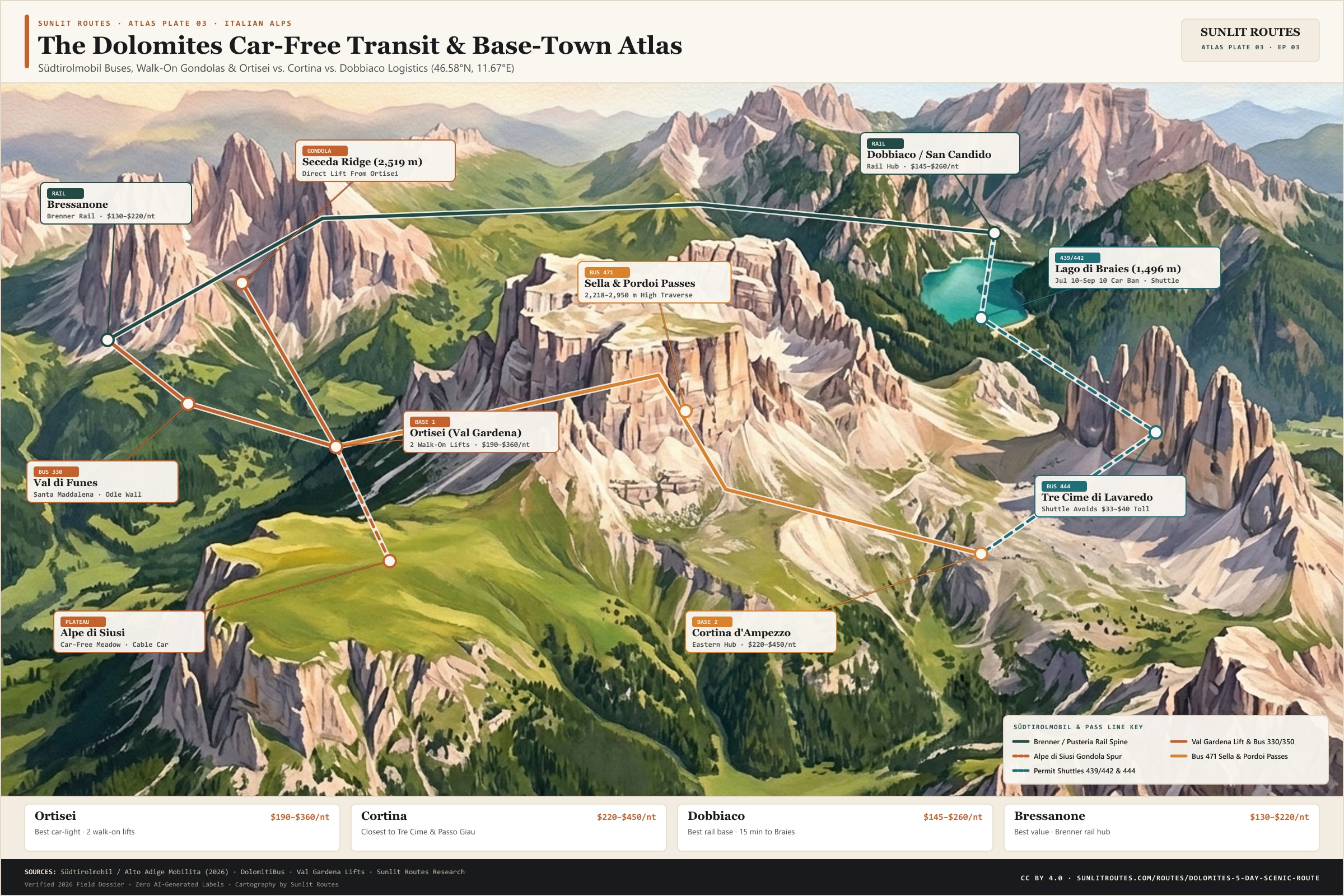
The Dolomites Car-Free Transit & Base-Town Atlas
Südtirolmobil Bus Lines, Gondola Hubs & Ortisei vs. Cortina vs. Dobbiaco Logistics
Plate 03 overlays South Tyrol's regional rail spine, Südtirolmobil high-pass buses, walk-on cable cars from Ortisei, and seasonal car-ban shuttles for Lago di Braies and Tre Cime onto Dolomites relief.
Primary Sources: Südtirolmobil / Alto Adige Mobilita (2026), DolomitiBus, Val Gardena Lift Schedules, Sunlit Routes Field Research
Stage-by-Stage Progression
Day-by-Day Route Timeline
Val di Funes (Santa Maddalena) & Arrival in Ortisei
Enter South Tyrol through the Eisack Valley, stop below the Odle spires at Santa Maddalena, and check into Ladin-speaking Val Gardena.
Logistics: Take A22 Brenner motorway exit Chiusa/Val Gardena; Val di Funes sits 25 minutes off the highway before climbing into Ortisei.
Seceda Ridge Blades (2,519 m) & Alpe di Siusi Plateau
Ride two iconic lifts straight out of Ortisei—first up to Seceda's razor-tilted limestone slabs, then across Europe's highest alpine pasture.
Logistics: Both Seceda and Alpe di Siusi lifts depart within a 10-minute walk of central Ortisei; check if a Gardena Card beats individual lift tickets.
The Sella Pass, Passo Gardena & Shift East to Cortina
Cross the high mountain passes wrapping the Sella Massif—dramatic stone towers forged from ancient coral atolls—and drop into Veneto.
Logistics: Allow 4–5 unhurried hours for this 75-kilometer pass-hopping traverse; watch for cyclists sharing hairpin bends.
Tre Cime di Lavaredo Circuit & Cadini di Misurina
Reach Rifugio Auronzo early to circle the three iconic vertical limestone obelisks and walk out to the Cadini ridge viewpoint.
Logistics: From late May to mid-October, private cars require an advance online toll-road reservation ($33–$40) or the DolomitiBus shuttle from Misurina/Dobbiaco.
Lago di Braies Dawn Reflection & Valley Departure
Arrive at Lago di Braies before 8:00 AM to catch mirror-still emerald reflections of Croda del Becco before heading back to Venice or Innsbruck.
Logistics: Between July 10 and September 10, the Braies access road closes to non-reserved private vehicles (9:30 AM–4:00 PM); pre-book parking or board Shuttle 439/442.
Accommodation Strategy
Where to Stay: Base-Town Comparison & Map
| Base Town | Vibe | Ideal For | Nightly USD | Trade-Offs |
|---|---|---|---|---|
| Ortisei (Val Gardena) | Walkable Ladin woodcarving village with direct lifts up to two plateaus | First-time visitors, car-light travelers, and western Dolomites loops | $190–$360/night | + Walk straight onto the Seceda gondola AND Alpe di Siusi cable car from town; free Sudtirol Guest Pass regional bus card at most hotels; polished bakeries and chalets. − Further from eastern landmarks like Tre Cime di Lavaredo and Lago di Braies (90–110 minutes drive); books out 4–6 months ahead. |
| Cortina d'Ampezzo | Historic Olympic alpine town framed by Tofane and Cristallo walls | Eastern Dolomites highlights (Tre Cime, Lago di Sorapis, Passo Giau) | $220–$450/night | + Fastest morning access to Passo Giau, Cinque Torri, and Tre Cime di Lavaredo; major Olympic infrastructure upgrades completed for 2026. − Noticeably higher hotel and dining rates; traffic bottlenecks along SS51 during August peak weeks. |
| Dobbiaco / San Candido (Alta Pusteria) | Broad green valley corridor linking train lines to Tre Cime and Braies | Car-free rail travelers and families seeking quieter rates | $145–$260/night | + Direct railway station from Bolzano/Innsbruck; 15 minutes from Lago di Braies shuttle hub; noticeably calmer pricing than Cortina. − Requires a long cross-mountain drive or bus transfer to reach Seceda and Val di Funes. |
| Bressanone (Brixen) / Chiusa | Medieval Tyrolean riverside town at the western edge of the peaks | Budget-conscious travelers and autumn wine-and-chestnut loops | $130–$220/night | + Half the nightly chalet rate of Ortisei; 25 minutes from Val di Funes; major Brenner railway hub. − Requires 35–45 minutes of daily uphill driving or bus riding to reach high alpine lift stations. |
Transparent 2026 Economics
Real Trip Cost Calculator & Breakdown
2026 Trip Budget Estimator
The Dolomites · On-the-ground spend (excl. flights)
$1,410 per person ($282/day incl. shared-room savings).
Covers lodging, local transit, daily meals, and flagship entry fees at 2026 field-verified rates.
| Expense Category | Lean / Budget | Mid-Range | Field Notes |
|---|---|---|---|
| Alpine Chalet / Guesthouse (per person, double occ.) | $90 | $165 | Bressanone or Dobbiaco guesthouses start around $150–$190/night for two; Ortisei and Cortina boutique chalets run $250–$420/night. |
| Mountain Rifugio Lunches & Ladin Dinners | $38 | $65 | Refuge speck platters, canederli dumplings, and apple strudel run $18–$26; sit-down alpine dinners average $35–$55. |
| Rental Car, Mountain Parking & Shuttle Permits | $22 | $38 | Compact SUV rental + fuel plus gated parking/toll permits ($12 at Braies, $33–$40 road toll at Tre Cime Auronzo). |
| Cable Cars & Multi-Day Lift Passes | $25 | $52 | Single Seceda or Alpe di Siusi round-trip gondolas cost $42–$54; the 3-in-4-day Gardena/SuperSummer card cuts repeat lift costs. |
Vetted Local Operations
Top Bookable Excursions & Passes
 GetYourGuide9 hours
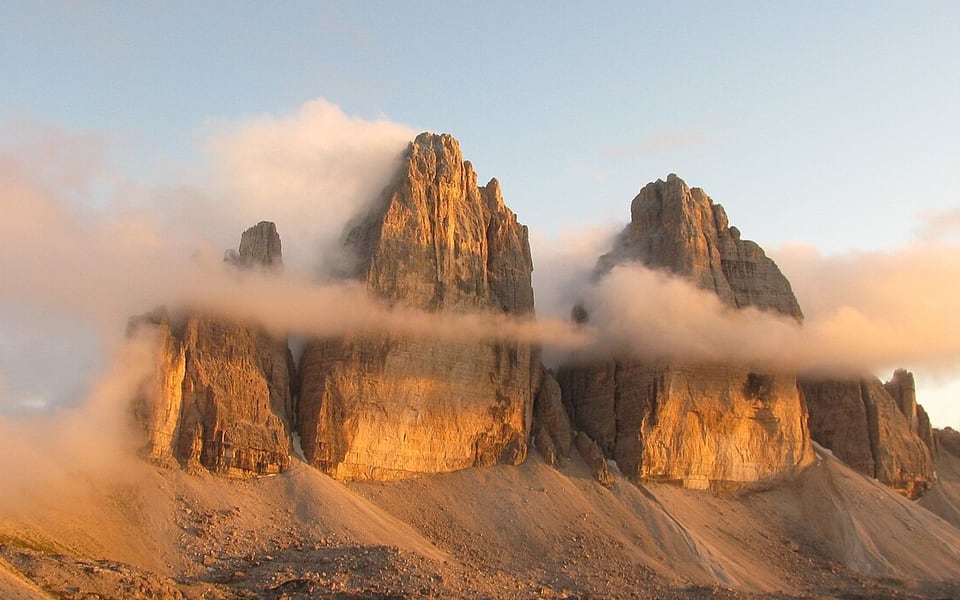
Dolomites Full-Day Scenic Loop from Cortina or Bolzano (Tre Cime & Braies)
Solves the strict summer road-access permit rules at Lago di Braies and Tre Cime without fighting dawn toll queues or full parking lots.
Photo: Jon Shave (CC BY 2.0, Wikimedia Commons)
 GetYourGuide8.5 hours
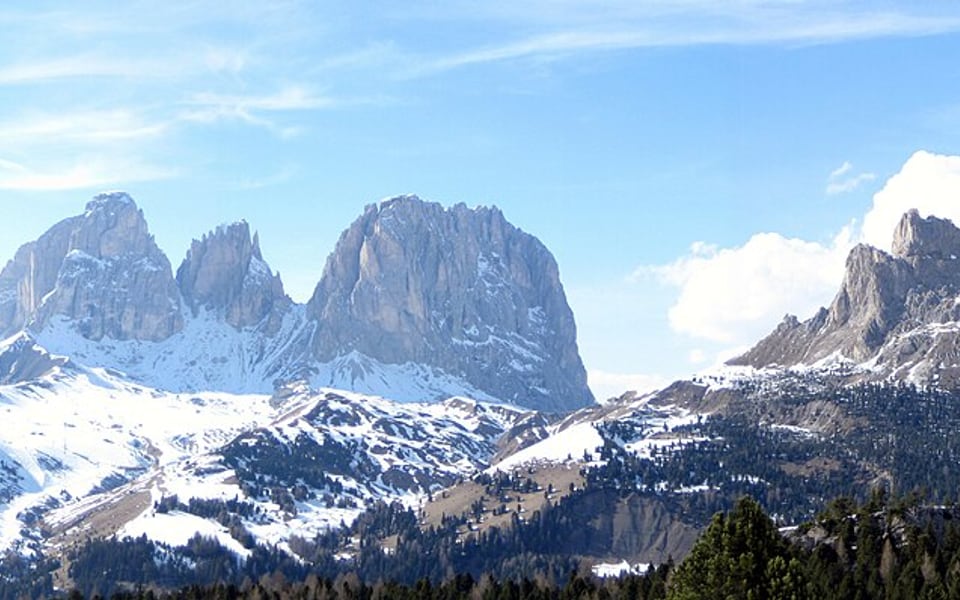
Val Gardena, Passo Pordoi & Sella Pass Guided Alpine Day Tour
Covers the classic Sella Ronda high-altitude passes while letting non-drivers enjoy sheer rock-wall views instead of watching tight hairpin lanes.
Photo: Aconcagua (CC BY-SA 3.0, Wikimedia Commons)
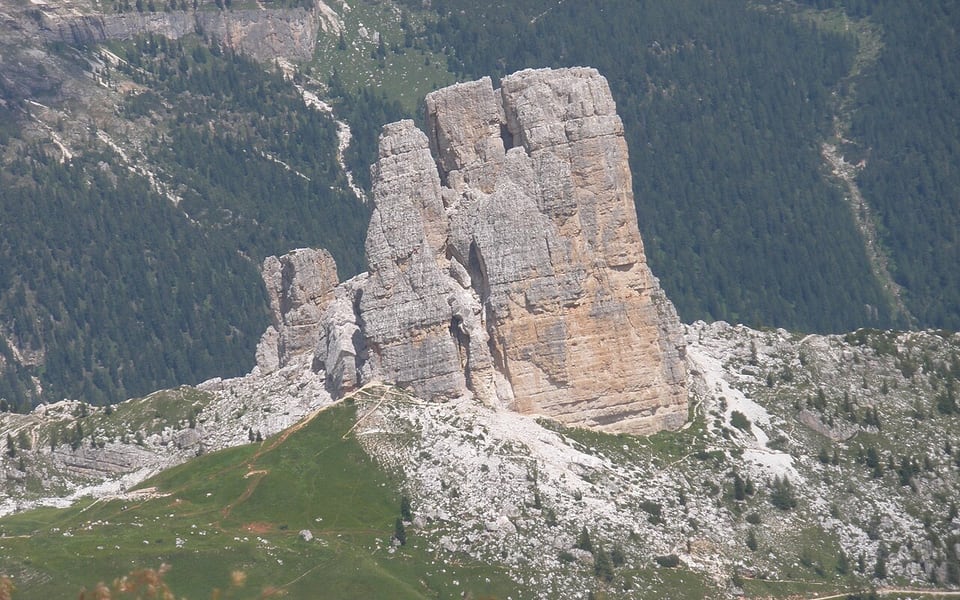 GetYourGuide5 hours
Cortina d'Ampezzo Cinque Torri & WWI Open-Air Ridge Guided Walk
Pairs alpine geology with a mountain historian guiding through preserved 1915–1917 Italian and Austro-Hungarian rock trenches.
Photo: MaiDireLollo (CC BY-SA 3.0, Wikimedia Commons)
Tropical Coral Reefs Standing 10,000 Feet in the Sky
Look at the jagged, vertical towers of Tre Cime di Lavaredo or the razor-edged ridge of Seceda, and they resemble no other mountain range in Europe. While the neighboring Central Alps consist largely of dark granite and metamorphic gneiss compressed smoothly into rounded glaciers, the Dolomites rise as stark, sheer pale fortresses tinted warm rose at dusk.
They look like coral architecture because that is literally what they are. Around 250 million years ago, during the Triassic period, northern Italy lay submerged beneath a shallow, warm tropical lagoon of the Tethys Ocean. Over millions of years, billions of calcareous algae, sponges, and reef-building organisms secreted thick layers of calcium carbonate across subsiding seabeds, constructing towering underwater atolls up to a kilometer thick. When the African and Eurasian tectonic plates later collided, those buried tropical reefs were thrust more than 3,000 meters into the European sky.
Magnesium-rich mineral alteration turned the limestone into dolomite—named after 18th-century French mineralogist Déodat Gratet de Dolomieu—giving the cliffs both their vertical fracture lines and their celebrated Enrosadira glow, where iron and magnesium crystals catch low-angle golden sunlight and burn coral-pink for twenty minutes every evening.
Ortisei vs. Cortina d'Ampezzo: Which Base Wins?
First-time planners routinely underestimate how slowly roads move across the Dolomites. On a flat map, Ortisei in the west and Cortina d'Ampezzo in the east sit barely 60 kilometers apart. In reality, linking them requires climbing over 2,100-meter mountain passes along narrow hairpins shared with touring cyclists and regional coaches—turning a seemingly short distance into a 90-to-120-minute drive each way.
| Comparison Factor | Ortisei (Val Gardena — West) | Cortina d'Ampezzo (Veneto — East) |
|---|---|---|
| Best Nearby Landmarks | Seceda, Alpe di Siusi, Val di Funes, Passo Sella | Tre Cime di Lavaredo, Passo Giau, Cinque Torri, Lago di Sorapis |
| Walkable Lift Access | Wins: Walk straight onto both Seceda & Alpe di Siusi lifts from town | Requires short drives or buses to reach main high-pass trailheads |
| Car-Free Viability | Wins: Direct SAD Bus 350 from Bolzano + free Südtirol Guest Pass | Possible via Cortina Express / DolomitiBus, fewer seamless rail links |
| 2026 Hotel Rates | $190–$360/night (high demand, calm Ladin village atmosphere) | $220–$450/night (luxury resort town with post-2026 Olympic upgrades) |
The Verdict: If you have five days, split two nights in Ortisei followed by two nights in Cortina or Dobbiaco so you cut daily windshield time in half. If you can only pick one single base—especially without a car—Ortisei wins cleanly for walkable two-way cable-car access and free provincial transit cards.
The 1915–1917 Mountain War Engineering Legacy
When you walk across Tre Cime di Lavaredo, Cinque Torri, or Lagazuoi near Cortina, the trails feel unusually wide and remarkably well-graded for 2,400-meter rock faces. That accessibility is a direct legacy of World War I. Between May 1915 and November 1917, the Dolomites formed the highest alpine front line in modern warfare, pitting Italian Alpini regiments against Austro-Hungarian Kaiserjäger forces across vertical limestone ridges.
Unable to advance across exposed cliff faces, both armies became tunnel engineers. Soldiers hand-drilled kilometers of galleries straight through solid dolomite—most famously the 1,100-meter Lagazuoi mine tunnel spiraling down inside the mountain—and strung early cableways across abyssal drops to haul artillery, timber barracks, and food rations above the snowline. When peace returned, local alpine clubs converted those wartime mule tracks, rock ladders, and supply ledges into the modern Alta Via trail and via ferrata network.
5-Day Dolomites Scenic Route
Day 1: Val di Funes & Ladin Arrival in Ortisei
Approach from Innsbruck (1 hr 30 mins) or Verona/Venice (2.5–3 hrs) via the A22 Brenner motorway and exit at Chiusa / Val di Funes. Before climbing into Val Gardena, detour 20 minutes up the narrow green valley to Santa Maddalena.
From the panoramic pasture path above the village—and down beside the tiny baroque Church of St. Johann in Ranui—the vertical wall of the Odle/Geisler group rises cleanly behind wooden hay barns without a single power line obstructing the frame. Continue 35 minutes south into Ortisei, the cultural heart of the trilingual Ladin valleys (where road signs list Italian, German, and ancient Rhaeto-Romance Ladin side by side).
Day 2: Seceda Blades & the Alpe di Siusi Tableland
Walk out your Ortisei hotel door and step straight onto the Seceda two-stage gondola at 8:30 AM ($46–$52 round trip). At 2,519 meters, you emerge onto the slanted summit of an ancient reef block—a vast grassy ramp ending abruptly in a sheer limestone precipice plunging toward Val di Funes. Follow the easy 45-minute ridge trail eastward toward Pieralongia for espresso and apple strudel at a timber rifugio while watching clouds drift between the jagged Fermeda towers.
Descend to Ortisei for lunch, then walk across town to the Mont Sëuc cable car rising directly onto Alpe di Siusi (Seiser Alm)—Europe's highest contiguous alpine pasture at 1,800–2,200 meters. Rent an e-bike at the top station or follow Trail 30 past historic wooden hay huts framed by the massive wedge of Sassolungo.
Day 3: Across the High Passes — Sella, Pordoi & Giau
Pack your bags and drive the legendary Sella Ronda mountain-pass arc eastward—arguably the finest 75-kilometer alpine road traverse in southern Europe:
- Passo Sella (2,218 m): Pause beneath the vertical limestone needles of Sassolungo; if winds are calm, ride the retro two-person stand-up "coffin lift" (Telecabina Forcella del Sassolungo) up into the tight rock cleft at 2,685 meters.
- Passo Pordoi (2,239 m): Ride the 4-minute cable car up to Sass Pordoi (2,950 m)—known locally as the "Terrace of the Dolomites"—for a 360-degree geological cross-section stretching all the way to the Marmolada glacier.
- Passo Giau (2,236 m): Drop toward Selva di Cadore and climb the sweeping hairpins of Passo Giau roughly 90 minutes before sunset. As the sun sinks west, the pale pyramid of Ra Gusela turns bright rose-amber.
Drop down into Cortina d'Ampezzo (or continue northeast to Dobbiaco for quieter hotel pricing) for the night.
Day 4: Tre Cime di Lavaredo & WWI Trench Ridges
Leave early to reach Rifugio Auronzo (2,320 m)—either by pre-booking the mandatory summer toll-road slot online ($33–$40 per car) or riding the frequent DolomitiBus shuttle from Misurina or Dobbiaco.
Walk the classic 10-kilometer circuit (#101 → #105) around the north face of Tre Cime di Lavaredo (Drei Zinnen). Notice the rusted wire remnants and blasted supply tunnels etched right into the neighboring slopes of Monte Paterno: from 1915 to 1917, Italian Alpini and Austro-Hungarian Kaiserjäger troops fought a brutal high-altitude "White War" across these very ledges, carving whole barracks and artillery galleries inside the solid dolomite. Stop for hot barley soup (zuppa d'orzo) at Rifugio Locatelli (2,405 m) facing the three sheer north walls, then add a 40-minute out-and-back walk on the south side of Rifugio Auronzo to the dramatic spire viewpoint of Cadini di Misurina.
Day 5: Lago di Braies Dawn & Departure
Set an early alarm to arrive at Lago di Braies (Pragser Wildsee) by 7:30 AM. Before morning breezes disturb the 1,496-meter glacial basin, the pale limestone massif of Croda del Becco mirrors cleanly across emerald water beside the iconic weathered timber boathouse. Walk the gentle 3.6-kilometer perimeter trail before daytime crowds arrive.
If traveling between July 10 and September 10, remember the strict 9:30 AM–4:00 PM private vehicle closure on the Braies valley road—early dawn arrivals before 9:30 AM require pre-booked parking tickets, or you can park cleanly in Villabassa/Dobbiaco and ride Shuttle 439/442 straight to the shoreline. Depart south toward Venice Marco Polo (2 hrs 15 mins) or north toward Innsbruck (1 hr 45 mins).
Dolomites Without a Car: Südtirolmobil Bus & Cable-Car Passes
- Car-Free via Rail & Guest Pass: You can run the core western and eastern highlights of the Dolomites without a car between mid-June and early October. Ride EuroCity trains to Bolzano or Fortezza, take SAD / Südtirolmobil Bus 350 directly up into Ortisei, and ride the Pusteria Valley regional railway across to Dobbiaco / San Candido for Shuttle 439/442 (Lago di Braies) and the 444 DolomitiBus (Tre Cime di Lavaredo). Almost every registered hotel in South Tyrol issues a complimentary Südtirol Guest Pass, covering unlimited regional trains and buses province-wide.
- With a Rental Car: Ideal if you want dawn access to Passo Giau, Val di Funes, and small rifugio trailheads. Pick up in Venice, Verona, Milan, or Munich/Innsbruck; verify your vehicle includes summer/all-season tires (winter tires or snow chains are legally required across South Tyrol from November 15 to April 15).
- Alpine Rail Extension (Bernina Express Link): Extending west from Bolzano or Milan? Pair this Dolomites loop with the UNESCO Bernina Express route crossing the 2,253-meter Bernina Pass between Tirano (northern Italy) and St. Moritz / Chur in Switzerland—one of Europe's cleanest rail-to-ridge combinations.
Connectivity & Travel eSIM Note
Crossing between Italian provinces and high-pass valleys means relying on live Südtirolmobil bus timetables, Lago di Braies / Tre Cime QR parking passes, and mountain weather radar. Installing an Italy or Europe Travel eSIM before departure keeps mobile data active across Bolzano, Val Gardena, and Cortina without roaming surprises.
Seasonality Matrix: Navigating Snow & Lift Dates
| Months | Trail & Lift Status | Crowd & Budget Reality | Verdict |
|---|---|---|---|
| Mid-June – Early July | Wildflowers peak; 95% of lifts open; occasional high north-facing snow patches | Moderate rates; crisp morning visibility | Best Overall Balance |
| Mid-July – August | All lifts and high passes open; afternoon mountain thunderstorms common | Peak European holiday traffic; Braies & Tre Cime permits mandatory; hotels +40% | Book 5+ months ahead |
| September – Early October | Golden larch needles; stable crisp autumn air; fewer afternoon storms | Shoulder calm; lower chalet prices after Sept 15 | Top Photography & Hiking Window |
| November & May | Off-Season Gap: Most summer cable cars closed and rifugios shuttered | Lowest rates, but high passes & trails often snow-blocked | Skip for high-mountain routes |
Book your Ortisei and Cortina/Dobbiaco stays first—quality small chalets in Val Gardena routinely sell out by February for summer and autumn dates—and confirm your Tre Cime toll reservation and Lago di Braies parking/shuttle slot as soon as your itinerary dates lock in.
Cable-Car Pass Math & 2026 Alpine Cost Control
Lift tickets represent the fastest surprise expense in the Dolomites. A single adult round-trip on the Ortisei–Seceda gondola runs roughly $46–$52, Alpe di Siusi adds $30–$36, and Sass Pordoi adds another $30. If you plan to ride four or more lifts across a three-day window in Val Gardena or neighboring valleys, compare single-ride prices against the Val Gardena Card (3 or 6 consecutive days) or the regional Dolomiti Supersummer point-value / multi-day card.
Likewise, eating a hot sit-down lunch at a high-altitude mountain rifugio ($22–$30 per person for canederli bread dumplings, grilled polenta with mountain cheese, and strudel) delivers the best value in the Alps if you balance it with morning bakery picnics picked up in Ortisei or Dobbiaco before the first lift departs. Carrying refillable bottles saves significantly as well—cold mountain spring fountains flow freely in almost every South Tyrolean village square.
Practical Field Questions
Frequently Asked Questions
Splitting 2 nights in Ortisei (west) and 2 nights in Cortina or Dobbiaco (east) eliminates up to 3 hours of daily cross-mountain driving. If you can only pick one base, Ortisei wins for walkable lift access and car-free bus cards.